
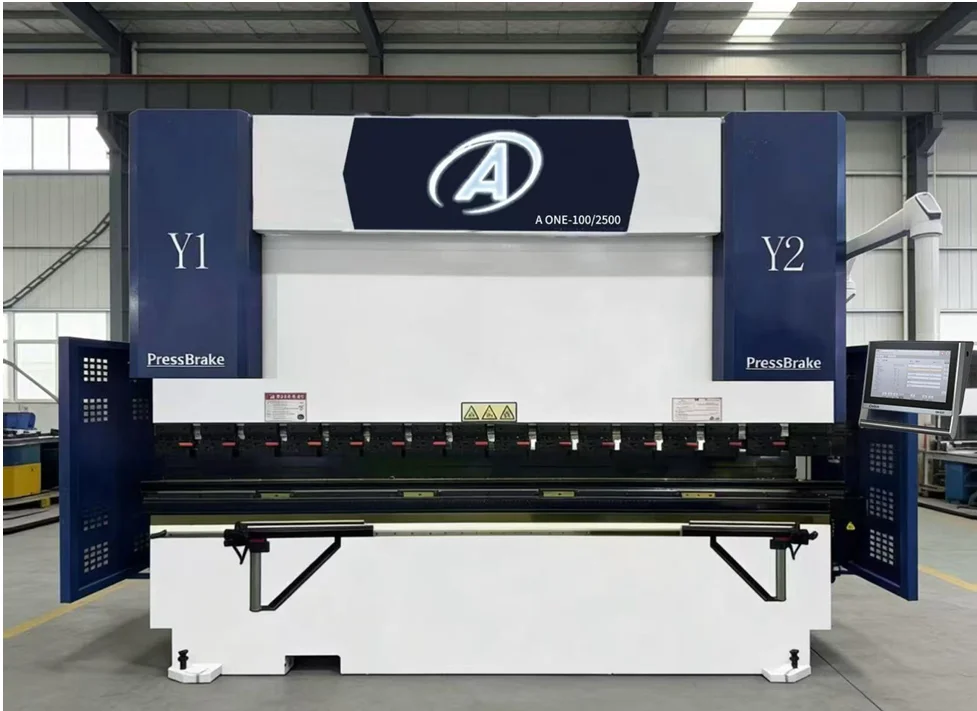
Describe the bend, not just the machine
Start with part drawings, material grade and thickness, bend length, bend angle and inside radius requirements. Include the most difficult part as well as your typical work. The machine and tooling must be considered together; a nominal machine rating alone cannot establish whether a part can be made.
Compare control requirements
NC and CNC labels are a starting point for discussion, not a complete description of control capability. Ask which axes are controlled, how programs are created, how the backgauge is positioned and how repeat jobs are recalled. Evaluate the proposed system using your own part sequence and operator needs.
Discuss tooling and part handling
Review punch and die geometry, available working clearance and the sequence of bends. Check whether earlier bends interfere with later operations. Discuss the weight and dimensions of your blanks, support arrangements and how operators will handle finished parts safely.
Plan the installation
Ask for confirmed electrical, foundation, access and space requirements for the quoted configuration. Include clearance for material movement and maintenance. Before ordering, agree in writing on the supplied tooling, commissioning scope, training, delivery and commercial terms.
Frequently asked questions
How do I choose a press brake capacity?
Provide material properties, thickness, bend length and proposed tooling to the supplier. Request a calculation for your actual application.
Does CNC remove the need for skilled operators?
No. Setup, tooling selection, part handling and verification still require trained operators and suitable safety procedures.
Explore the machinery
NC / CNC Press Brake Machine ↗
Single Table CNC Fiber Laser Cutting Machine ↗
Related reading
Plasma or fiber laser? Start with the parts you need to make. ↗
Before the laser arrives: planning your workshop workflow. ↗